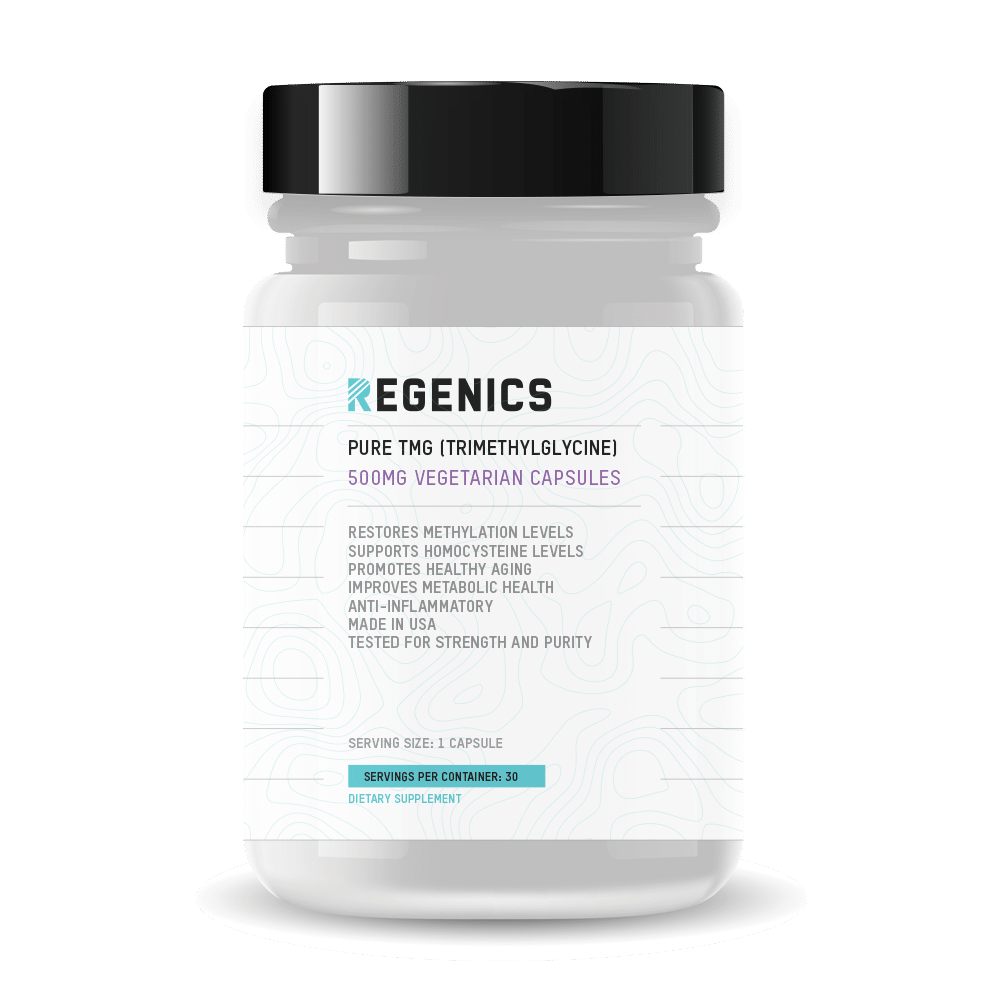
Description
TMG (trimethylglycine) is a simple methyl donor that helps recycle homocysteine, supports liver function, and reinforces cellular protection. At Regenics, it’s used as an oral therapy with dosing guided to support cardiovascular health and overall methylation balance.
What is TMG (Trimethylglycine) and its Role in Methylation Support
TMG (also called betaine TMG or trimethylglycine) is a naturally occurring methyl donor found in foods like beets and whole grains. In the body, it donates methyl groups to help recycle homocysteine back to methionine, a reaction central to methylation support for DNA synthesis, neurotransmitter production, and cellular detox pathways. In short, this process regulates the function of your genes and how your brain produces the chemicals that influence your mood and energy levels.
Key Health Benefits: Cardiovascular Support, Liver Function, Homocysteine Metabolism
TMG (trimethylglycine) acts as a methyl donor and cellular osmolyte, so TMG benefits show up most clearly in methylation pathways tied to cardiovascular health and liver function.
- Homocysteine metabolism. TMG helps convert homocysteine back into methionine through a process called remethylation (this is actually a cornerstone of methylation support in your body).
- Cardiovascular support. When TMG helps keep homocysteine levels in the healthy range, your blood vessels can function better. TMG for heart health works by supporting proper endothelial function and circulation.
- Liver function. Assists hepatic methylation and normal fat handling in the liver, supporting balanced enzyme activity and everyday cellular protection in hepatocytes.
Moreover, through its role in methylation support, a trimethylglycine supplement (TMG) also helps protect cells from oxidative stress and supports DNA repair mechanisms.
Dosage, Usage Guidelines, and Safety Considerations
TMG therapy is typically oral (capsules). Depending on your needs, folate/B12/B6 can be added. It also works best inside a broader healthy-aging plan. Folded into our Solutions for Anti-Aging plan, it supports methylation processes tied to DNA upkeep and everyday antioxidant defense. If you prioritize vascular markers, ask your clinician about a TMG for a heart health plan guided by labs and periodic monitoring.
Most patients tolerate trimethylglycine supplement therapy exceptionally well, though medical supervision remains essential. The most reported effects are GI upset (bloating, cramps, nausea, diarrhea), typically at higher doses.
TMG (betaine TMG) is not routinely used in pregnancy or while nursing without physician guidance. If you have complex cardiovascular disease, significant renal or hepatic conditions, or take medications affecting methylation, use TMG capsules only under medical supervision.
Why Choose Regenics: Expert Medical Team Ensuring Safe and Personalized Care
Licensed Regenics physicians may prescribe TMG capsules when clinically appropriate. The dosage and duration of treatment are personalized based on individual health assessments, laboratory results, and specific therapeutic goals, and are tied to TMG benefits.
When prescription medications are part of your program, medications are compounded and dispensed through FDA-registered pharmacies. Sometimes this means combining it with targeted IV infusions or other supportive therapies to maximize your results.
Care includes periodic review of homocysteine, B-vitamin status, and lipids to keep cardiovascular health and overall safety front and center. All medications are dispensed through licensed pharmacies with privacy ensured.
Remember: this page describes a medical treatment option and is not a substitute for personalized medical advice. Licensed physicians may prescribe this therapy when clinically appropriate; medications are compounded and dispensed through FDA-registered pharmacies.